
Steel Budgeting UAE: How to Estimate Material Costs
A steel budget that looks sound on paper can cost a fabricator or main contractor a meaningful share of margin within a single quarter. The usual culprit is not a dramatic price spike. It is a takeoff that missed connection plates, a quote that expired before the purchase order was raised, and a freight line nobody updated when the shipment changed ports. Steel budgeting in the UAE is the discipline of catching these small gaps before they compound. This guide explains how we estimate steel material costs for Dubai and wider UAE projects, step by step, with the checks that keep the number honest.
Table of Contents
Quick Takeaways
Key Insight | Explanation |
|---|---|
Take tonnage from detailed drawings, not concept sketches | Connections, base plates, stiffeners and bracing are rarely drawn at concept stage, so early weights understate the steel. |
Price each profile and grade on its own line | Hollow sections, plates and open sections carry different premiums, and blending them hides where the budget is drifting. |
Separate mill price from landed price | Freight, port handling, clearance, inland transport and stockholder margin each need a visible line before you compare quotes. |
Put a validity date on every steel quote | Steel quotes move with raw material and freight, so an undated quote is an open-ended risk on your margin. |
Budget waste from your cutting plan | Off-cuts and nesting losses belong in the material budget, not hidden inside the fabricator's margin. |
Split contingency into design risk and price risk | A single pot makes it impossible to tell which assumption failed when the final number moves. |
Re-run the estimate at every design freeze | Each change to member sizes or grades changes both tonnage and price, so the budget must follow the drawings. |
Why Steel Budgets Fail in the UAE
Most steel budgets fail for reasons that have little to do with the steel market itself. The estimate is built from a concept drawing, accepted at tender, and then carried forward for months without anyone checking it against detailed design. By the time the fabrication package is issued, tonnage has grown and the price basis has moved.

Market conditions make this worse. One market research summary of the GCC structural steel sector puts regional steel demand in 2024 up about 11 percent year on year, with the UAE leading at roughly 20 percent. When demand moves that fast, mill allocations tighten and stockholders reprice more often, so a number that was right in one quarter can be wrong in the next.
Three Gaps That Repeat on Almost Every Job
The first gap is scope drift. Framing gets estimated from the architectural model, then the structural engineer adds bracing, transfer beams and extra stiffeners during coordination. The second is price age. A stockholder quote is a snapshot, and the purchase order often lands weeks later. The third is cost classification. Freight, cut-to-length charges and surface treatment get buried under a single "steel" line, which makes it impossible to see which assumption failed when the final invoice arrives.
A common mistake is treating the budget as one number that the project team owns. A better habit is to keep it as a set of assumptions, each with a date, a source and an owner. When an assumption breaks, you know exactly which line to reopen.
Start With Takeoff Quantities, Not Prices
Every reliable steel estimate starts with tonnage, and tonnage starts with the most detailed drawings you can get. A price per tonne is only as useful as the weight it multiplies. A budget built on concept-stage sizes will almost always understate the steel, because connections and bracing are seldom drawn at that stage.
Converting Drawings Into Tonnage
Take member lengths from the general arrangement and section sizes from the schedule, then calculate mass for each profile. Steel has a density of about 7,850 kg per cubic metre, so a member's mass is its cross-sectional area multiplied by its length and that density. Standard profile tables already give mass per metre, which is faster and less error-prone for common sections. Group members by profile and grade so each group can be priced separately later.
In practice, we recommend a second pass on every frame. Count the members on the elevations, then count them again on the plan. Mismatches between the two counts are where missing beams usually hide.
Allowances for Cutting, Connections and Waste
Theoretical weight is not the weight you buy. Cutting losses, off-cuts that cannot be reused, and the extra steel in splice plates and end plates all add tonnage that the schedule does not show. We budget a separate allowance for connections and another for waste, so each can be checked independently at detailing stage.
The waste allowance should follow your cutting plan, not a habit. Long, repeated spans cut efficiently, while many short, irregular members produce more off-cuts. Ask your fabricator how they nest and cut before you lock the figure.
Pro tip: Ask the detailer to issue a weight summary by profile with every shop drawing revision. Comparing two revisions line by line shows exactly where the tonnage moved.
Breaking Down the Steel Price
A steel price in the UAE is not one number. It is a base price for the product, a premium for the profile or grade, and a set of costs that move the material from the mill or port to your site. Budgeting works best when each of these sits on its own line, because they move for different reasons.
Mill Price Versus Landed Price
The mill or base price reflects global raw material and production conditions. The landed price adds freight, port handling, customs clearance, inland transport and the stockholder's margin. Ask every supplier for both the ex-stock price and the delivered price to your site, so you compare like with like. A low headline price with delivery excluded is the most common source of surprise in tender-stage comparisons.
Build the logistics line from your actual delivery plan. A full-truck delivery to a Dubai site has a different cost profile from a part-load sent to a yard in another emirate, and the estimate should show that difference. Alpine Metals quotes both figures for stocked sections so that contractors can compare delivered costs directly.
Product Type and Grade Premiums
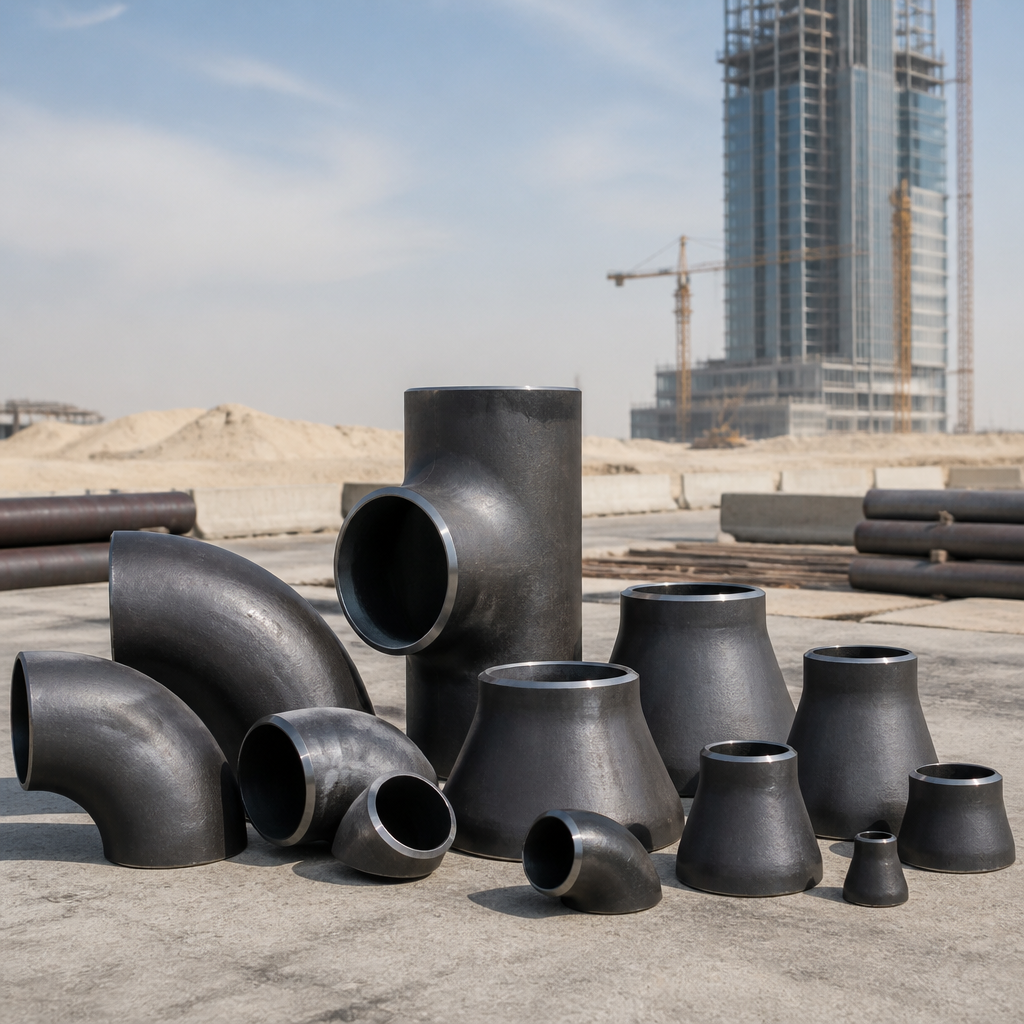
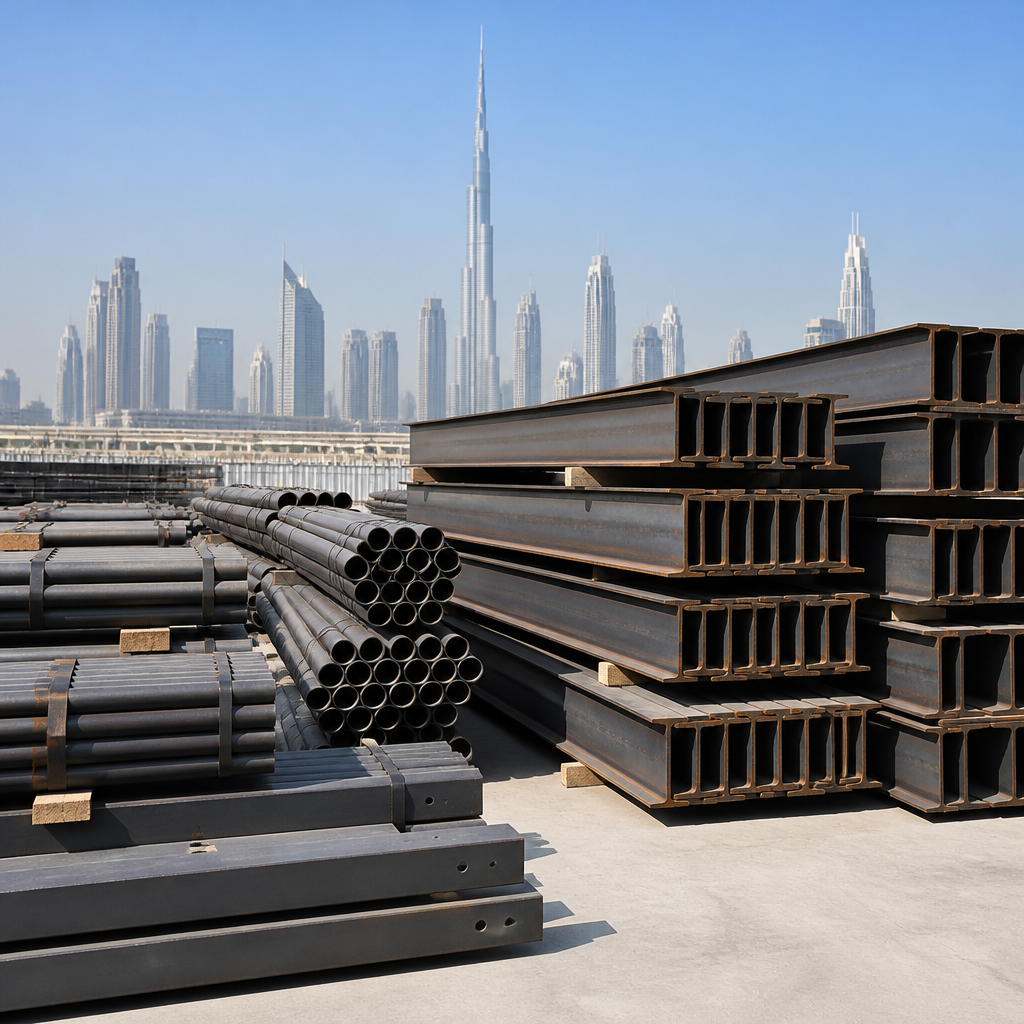
Hot-rolled sections, plates, hollow sections and reinforcing bar do not move together. Hollow sections often carry a different premium from open sections, and plate prices depend on thickness and cutting requirements. Higher-strength grades cost more, so specifying a grade the design does not need is an avoidable expense. Where the engineer allows alternatives, price both options before the specification freezes.
Using Market Data to Set Escalation Ranges
Escalation is the gap between the price you budgeted and the price you pay when the steel is bought. Market reports cannot tell you the price on the day of purchase, but they can show the direction and strength of demand pressure. Used sensibly, that is enough to set a reasonable band around your number.

Reading Forecasts Without Overreacting
One market research summary projects the GCC structural steel market to grow from about USD 17.94 billion in 2025 to about USD 30.02 billion by 2032, a compound annual growth rate near 7.6 percent for 2026 to 2032. Market value growth is not the same as price growth, since volume, product mix and currency all shift the figure. Still, sustained demand growth means suppliers will have less slack, which is a reason to widen your band rather than trust a flat price.
Be careful with headline numbers that mix steel segments. A figure for steel fiber in concrete or for one product line does not describe the structural sections in your frame. Use the segment that matches your scope.
Setting an Escalation Band
Set a base case, an upside case and a downside case for the steel line, then decide which one the project can carry. Tie the band to a specific supplier price review date, not to a general feeling about the market. Review it at each procurement milestone, because a band set at tender may be irrelevant by the time the main frame order is placed.
Fabrication, Coating and Erection Costs
Raw steel is only part of a structural steel package. Fabrication labour, cutting, drilling, welding, surface preparation, coating and transport all add cost, and many budgets bury them under a vague fabrication line that never gets checked. Keeping material and fabrication separate lets the estimator see which side of the budget is drifting.
Fabrication Rates and Shop Drawing Effort
Fabrication cost depends on connection complexity more than on tonnage alone. A frame with many bolted moment connections costs more per tonne than a simple braced frame of the same weight. Industry guidance on structural steelwork cost drivers makes the same point, treating frame rates as something to tailor to each project. Use a per-tonne rate as a check on a bottom-up estimate, not as the estimate itself.
Shop drawing and detailing effort belongs here too. Late design changes add detailing hours that never reached the material estimate, so ask fabricators to price revisions separately.
Coating and Site Erection
Surface treatment is one of the easiest costs to underestimate in the Gulf. Coating systems suited to coastal, high-humidity environments add cost per square metre, and the system should be agreed with the specifier before the price is fixed. Erection cost depends on crane access, sequencing and site congestion. A tight urban site with little laydown area can cost more to erect than an open site carrying the same steel weight.
Pro tip: Ask for the coating specification and total surface area in square metres as separate line items. That makes coating quotes comparable and lets you reprice only the coating if the specification changes.
Comparing Steel Pricing Approaches
Three approaches cover most UAE steel budgeting. Each suits a different stage of the project and carries a different kind of risk. Choose deliberately rather than defaulting to whichever method your procurement team used last time.
Approach | Best Used For | Main Risk |
|---|---|---|
Fixed quote with a validity date | Tender pricing and early budget locks once tonnage is confirmed | The quote expires before the order is placed, or the supplier excludes freight and handling |
Index-linked price with periodic review | Long programmes where steel is bought in stages | The index does not track your product or grade closely, so the adjustment looks fair but misses your real cost |
Provisional sum with remeasurement | Projects where the design is still moving during early works | Cost certainty falls, and the client sees the number grow without a clear cause |
In our experience, a fixed quote is the right tool once tonnage is confirmed, and an index suits a long programme with staged buying. A provisional sum is a fallback for a design that is not ready, not a way to avoid budgeting. Whichever you use, write the assumption into the budget so it can be audited later.
Contingency and Price Validity
Contingency is where steel budgets are either protected or quietly consumed. If the contingency is one undivided pot, every design change and every price movement draws from the same source, and nobody can tell which risk caused the overrun. Splitting contingency is the most useful change most estimators can make.

Separating Price Risk From Design Risk
Hold one contingency for design development, such as added members, upgraded connections or revised grades. Hold a second for market movement, tied to your escalation band and quote validity dates. When the final number moves, you can see whether design or market caused it, and that conversation with the client becomes far easier.
A contingency that cannot say what it covers is not a contingency. It is an unexplained margin waiting to be spent.
Quote Validity and Price Windows
Every steel quote should carry a validity date and a clear statement of what happens after it expires. Suppliers have good reasons to reprice, so an expired quote does not mean a bad supplier, but it does mean the budget needs a fresh input. Put the expiry date into the project programme, and set the purchase trigger early enough to place the order while the price still applies.
Pro tip: Get the quote validity period in writing and link it to the programme. If the order date slips past the window, you will know the budget needs revisiting before the purchase order is raised.
Common Mistakes in Steel Budget Estimates
The mistakes below show up in contractor and fabricator estimates alike. None of them is exotic, which is exactly why they keep recurring. Fixing them takes discipline more than expertise.
The first is pricing from the wrong drawing revision. A quote built on an earlier issue of the frame drawings will not match the shop drawings, and the difference often surfaces only at delivery. The second is treating delivery as someone else's problem. If the estimate does not carry a delivered price, someone will discover the gap in the middle of procurement.
The third is ignoring the grade decision. Specifying a higher grade than the design requires adds cost without adding value, while a late grade change can invalidate an order already placed. The fourth is failing to reconcile the estimate with actual invoices. Feed final steel invoices back into the next estimate, and the error margin on your next project will shrink noticeably.
Frequently Asked Questions
How early can I produce a reliable steel budget?
You can produce an order-of-magnitude figure from concept sizes, but it should carry a wide band. A number you can defend to a client usually needs confirmed tonnage from developed structural drawings, plus a current supplier quote with a validity date.
Should steel be budgeted per tonne or per square metre?
Budget steel by tonne for materials, since that is how it is bought and priced. Use floor area only as a sense check against past projects, because layout, span and loading change steel per square metre a great deal.
How much waste allowance should I include in steel material estimates?
There is no single correct figure, because waste depends on the cutting plan, member lengths and how repetitive the frame is. Build the allowance from the fabricator's cutting approach, then record it as a separate line so it can be checked after cutting.
Why does the landed price differ so much from the quoted price?
Quotes often exclude freight, port handling, clearance, inland transport and the margin on stock held in the country. Ask for both the base price and the delivered price to site, and compare suppliers on the delivered figure.
What is the most useful single change to improve steel budget accuracy?
Reconcile every estimate against final invoices and shop drawing weights. That feedback loop shows where your allowances were wrong, and it is the fastest route to better estimates on the next project.
Can an index-linked price protect a budget from market swings?
It can limit exposure, but only if the index tracks the product and grade you are buying. An index that moves differently from your actual cost produces an adjustment that looks reasonable and still misses the real change.
What was the assumption that cost you the most on your last steel budget, and how did you catch it? Share your experience with us below.
Comments